
Instawork: Be your own boss
InstaworkBusiness
4.417.49K Reviews
- Version
- 2.243.0
- Installs
- 1.00M
- Age Rating
- Everyone
Screenshots
Our Review of Instawork: Be your own boss
 Analysis by Appyee
Finding flexible work sounds simple until the practical questions begin: where is the shift, how long does it last, what kind of experience does it require, and can it fit around everything else in the week? I found Instawork useful because it brings short-term work into one place instead of making me search through scattered listings. The app is aimed at people looking for shifts and gigs that may last from a few hours to a few months, so it sits somewhere between a job board and a scheduling tool.
My overall impression is that Instawork works best when I treat it as a system for building a dependable work routine, not as a magic button for instant income. The strongest results come from checking regularly, keeping my profile and availability accurate, and learning which opportunities genuinely fit my schedule. It is free, rated for Everyone, and developed by Instawork, which makes it approachable for a wide audience. At the same time, flexible work still depends on location, qualifications, timing, and the quality of the available opportunities.
How I use Instawork as a repeatable work routine
The basic workflow is straightforward. I open the app, look through nearby opportunities, and compare the shift length with my actual availability. That last step matters more than it sounds. A short shift may look attractive, but travel time, preparation, and the need to return home afterward can make it less practical than a longer assignment in the same area.
I also avoid treating every listing as interchangeable. A person who wants occasional extra work may use Instawork differently from someone trying to assemble a full week of shifts. For occasional work, I can focus on convenient times and nearby locations. For a more regular routine, I need to look for patterns: similar start times, manageable travel, and assignments that do not leave awkward gaps between commitments.
This is where the app’s flexible format becomes useful. It can appeal to someone between permanent jobs, a student with changing availability, or a worker who wants to supplement another source of income. It is also relevant to people who prefer trying different workplaces before committing to a longer arrangement. I like that the time horizon is not limited to one kind of employment; the opportunities can be measured in hours, days, or longer stretches.
A realistic example would be a person who has a part-time schedule that changes each week. Instead of promising availability everywhere, I would first mark the days I can genuinely work, then review nearby shifts in batches. I might choose one assignment early in the week and another later, leaving enough space for travel and unexpected changes. This approach is less exciting than accepting the first available option, but it reduces the chance of creating a schedule that looks good in the app and becomes exhausting in real life.
One useful habit is to separate “possible” from “sensible.” A shift can technically fit on a calendar while still being a poor choice because of distance, timing, or the energy required after another commitment. Instawork helps me discover options, but I still have to make the judgment. That is an important distinction for anyone expecting the app to decide which work is best.
What I check before accepting a shift
I read the listing with three questions in mind. First, can I arrive reliably? Second, does the duration match the amount of time I actually have? Third, does the assignment suit my experience and comfort level? These questions prevent a common mistake in flexible-work apps: choosing based on the headline and only thinking through the details afterward.
I also consider whether the opportunity makes sense as part of a larger week. One isolated shift may be worthwhile, but several poorly arranged shifts can create long commutes and irregular sleep. My preferred workflow is to review the whole week before committing whenever possible, rather than making each decision in isolation.
Another practical point is to keep expectations realistic about consistency. A marketplace for short-term work can offer useful variety, but it is not the same as having a fixed employer and guaranteed hours. If I need predictable income, stable benefits, or a permanent career path, I would compare Instawork with traditional employment sites and direct applications rather than relying on it alone.
Settings and profile details that deserve attention
The most valuable “settings” are the choices that determine what kind of work I can realistically see and accept. I would keep my location, availability, work preferences, and experience details current. Even a small mismatch can make browsing inefficient: an outdated schedule creates noise, while an incomplete profile may make suitable opportunities harder to evaluate.
I would also review the app after a major change in my life. A new class timetable, a second job, a move, or a change in transportation can alter which shifts are sensible. Flexible work only stays flexible when the information behind it reflects reality. Leaving old availability in place is an easy way to create avoidable conflicts.
Notifications deserve a deliberate approach as well. I prefer alerts that help me notice relevant opportunities without turning every phone check into a work search. If notifications become distracting, I would adjust my phone’s notification controls and establish specific times to browse. The goal is to make Instawork part of a routine, not let it dominate the day.
Before using any shift marketplace, I would also make sure I understand the practical requirements attached to the work I am considering. That includes the expected duties, arrival details, clothing or equipment expectations when stated, and any qualifications connected with the assignment. I would not assume that a convenient location means the work is suitable for a beginner.
One of the less obvious strengths of this approach is that accurate preferences improve decision quality even when they do not produce more listings. The benefit is not simply seeing a larger number of options; it is spending less time sorting through options that I cannot or should not take. For someone using the app every week, that reduction in wasted attention matters.
Faster patterns for experienced users
After the first few sessions, I would stop browsing randomly and create a repeatable review pattern. I might check at the same points in the day, compare new opportunities with my existing commitments, and decide quickly whether a listing belongs in my realistic shortlist. This is faster than opening every opportunity and reconsidering the same basic questions from scratch.
I also find it helpful to group shifts by practical value rather than by title alone. A nearby shorter assignment may be better than a longer one that requires an expensive or inconvenient journey. Similarly, two shifts with similar durations may feel completely different if one starts at a time that interferes with sleep or another responsibility.
A second useful pattern is to keep a personal record of what worked. I would note the types of shifts I handled comfortably, the travel times that felt acceptable, and the schedules that caused problems. Instawork can show opportunities, but my own experience becomes the filter that makes future choices faster. This is especially useful when I am balancing work with study, caregiving, or another job.
For people trying to build momentum, consistency is often more valuable than constant experimentation. I would first identify a manageable kind of assignment and a workable time window, then expand gradually. Taking every unfamiliar opportunity may create a broad history, but it can also make the week harder to control. A repeatable routine gives me a clearer sense of whether the app is genuinely helping.
There is also a trade-off between speed and caution. Accepting an opportunity immediately may be useful when timing is critical, but rushing can lead to preventable conflicts. My faster pattern is not “accept everything quickly.” It is to decide quickly because I have already defined my non-negotiables: maximum travel, unavailable hours, and the kinds of work I am prepared to do.
Compared with a conventional job board, Instawork feels more focused on immediate, flexible scheduling than on sending applications for long-term roles. Compared with asking friends, local groups, or staffing agencies, it gives me a more organized way to browse possibilities in one place. However, those alternatives may be better when I need personal recommendations, detailed career guidance, or a stable position with a clearly defined progression.
Where the app’s flexibility reaches its limits
The phrase “be your own boss” is appealing, but I would interpret it carefully. Choosing when to look for work and which opportunities fit can provide independence. It does not remove the responsibilities of showing up, meeting expectations, managing transportation, or dealing with an uneven flow of available work. The app gives me control over the search; it does not guarantee that every week will be equally productive.
Location is another important limitation. Instawork is most useful when there are suitable opportunities within a reasonable distance. Someone in an area with fewer listings may find the experience less rewarding than someone near a busy employment market. I would not judge the app after one brief search; I would check it across the times I actually want to work and see whether the available options match my needs.
Experience can narrow the practical value too. If I am qualified for only a small range of assignments, the app may feel limited until my profile and skills accurately reflect what I can do. On the other hand, I would not exaggerate experience simply to unlock more possibilities. A shift that exceeds my ability is not a good opportunity, especially when reliability and performance matter.
Another limitation is that flexible work can make planning psychologically harder. A fixed schedule tells me what the week looks like. A marketplace asks me to keep evaluating choices, and that can become tiring. People who prefer clear routines, guaranteed hours, and one consistent workplace may be happier with a direct employer or a traditional recruitment route.
I would also avoid using Instawork as my only plan if missing a week of work would create serious financial pressure. The app can be a useful channel for finding shifts, but responsible planning means keeping alternatives available. That might include applying directly to local employers, maintaining another job, or using a broader employment service for permanent roles.
On the technical side, the app requires a reasonably current mobile setup: it supports Android starting with version 7.0, and the current version is 2.241.1. That makes it accessible to many Android users, although anyone using an older phone should check compatibility before building a routine around it. The application has passed the scale test with more than a million installs, a 4.4 average rating, and roughly 45 thousand ratings, so it is clearly not an obscure experiment. Still, popularity cannot replace checking whether the local opportunities suit me.
Who will benefit most from this app
I would recommend Instawork most strongly to people who value control over timing and are comfortable making their own decisions. It is a good match for workers who want occasional shifts, people testing different work environments, and anyone who needs a practical way to look for shorter assignments near them. The free price also makes it easy to try without committing money upfront.
It can be particularly useful for someone with a changing weekly schedule. A student may have open days that move from one week to the next. A parent may have limited windows that depend on family arrangements. A person between jobs may want to earn while continuing a broader search. In each case, the app’s value comes from combining available work with an honest view of personal constraints.
I would be more cautious about recommending it to someone who wants a single long-term employer, a guaranteed number of hours, or a structured promotion path. That person should probably prioritize direct applications and established employment platforms. I would also hesitate if transportation is unreliable, because a flexible listing is not useful when reaching it consistently is difficult.
The Everyone content rating makes the app broadly approachable, but that should not be confused with every work opportunity being suitable for every person. The rating describes the app’s audience, not the personal fit of each assignment. I still need to read carefully, assess my abilities, and choose work that matches my circumstances.
My verdict after building a more disciplined workflow
Instawork is at its best when I use it with a little structure. I keep my information current, check opportunities at planned times, compare the full cost of a shift rather than just its duration, and learn from the assignments I accept. Those habits turn a stream of listings into a more manageable work-search routine.
What I like most is the combination of flexibility and immediacy. I do not have to search only for conventional full-time roles when what I need is a few hours, a short run of work, or a way to test a new direction. The app gives that kind of search a clearer shape than relying on scattered messages or browsing unrelated job pages.
What keeps me from calling it a complete employment solution is the uncertainty that comes with flexible work. Availability depends on the local market and the timing of my search, while the responsibility for choosing suitable shifts remains with me. That is not a flaw unique to Instawork, but it is important to understand before expecting it to replace stable employment.
With around seventeen thousand written reviews and a large user base, the app has attracted substantial attention, but my recommendation is still based on fit rather than popularity. I would tell a friend to try it if they want nearby short-term work and can manage an irregular schedule responsibly. I would tell someone seeking dependable long-term employment to use it alongside, not instead of, more traditional options.
My final view is that Instawork rewards organized users. If I browse casually and accept whatever appears first, the experience can feel uncertain. If I define my availability, protect my travel time, and repeat the same sensible checks, it becomes a practical tool for finding flexible work. That makes it worth trying for the right person, while keeping the limits of gig-based scheduling firmly in view.
Privacy and Permissions
See what permissions an app requests and how it handles your data.
- Identity
- read your own contact card
- Calendar
- read calendar events plus confidential information, add or modify calendar events and send email to guests without owners' knowledge
- Contacts
- read your contacts
- Location
- approximate location (network-based), precise location (GPS and network-based)
- Photos/Media/Files
- read the contents of your USB storage, modify or delete the contents of your USB storage
- Storage
- read the contents of your USB storage, modify or delete the contents of your USB storage
- Camera
- take pictures and videos
- Microphone
- record audio
- Wi-Fi connection information
- view Wi-Fi connections
- Other
- view network connections, full network access, run at startup, control vibration, prevent device from sleeping
Verdict
Strengths of Instawork: Be your own boss
- Flexible shifts let you choose work that fits your schedule.
- Useful for finding short-term jobs in hospitality and events.
- In-app messaging helps coordinate details with employers.
- Profile tools make it easy to showcase skills and experience.
- Digital shift information can simplify arrival and job preparation.
Limitations of Instawork: Be your own boss
- Job availability can vary significantly by city and season.
- Some shifts may require specific certifications or prior experience.
- Competition for popular shifts can be high.
- Earnings and payment timing may differ by job and location.
- Last-minute schedule changes can be inconvenient for workers.
Similar Picks in This Category
View All
LinkedIn: Community & Network
LinkedIn3.8

Zoom Workplace
zoom.com4.1

Microsoft Teams
Microsoft Corporation4.6

Meta Business Suite
Meta Platforms, Inc.4.6

Webex Meetings
Cisco Systems, Inc.4.5

TeamViewer Remote Control
TeamViewer4.4
Frequently Asked Questions
What is Instawork: Be your own boss?
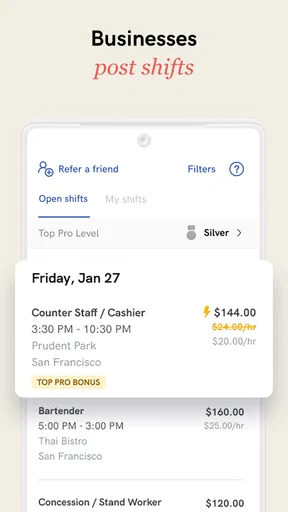
Instawork is a mobile marketplace that connects hourly workers with businesses looking for temporary, part-time, or flexible staff. After creating a profile, you can browse available shifts in your area, review details such as pay and schedule, and apply for suitable opportunities. It is mainly designed for hospitality, events, warehouse, retail, and other service-related work.
How do I find and accept shifts on Instawork?
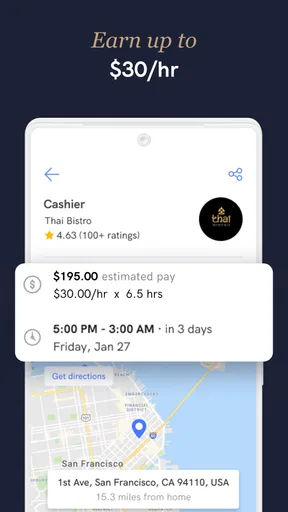
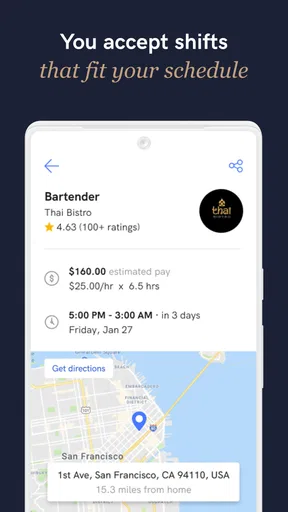
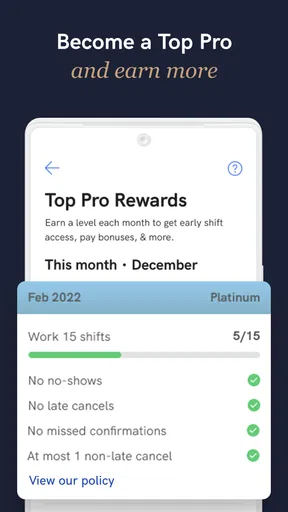
Once your profile is completed and approved, Instawork shows shifts based on your location, experience, availability, and qualifications. Each listing normally includes the job title, workplace, date, hours, expected duties, and estimated earnings. Before accepting, read the requirements carefully and make sure you can arrive on time, since reliability and attendance can affect your future access to opportunities.
How does payment work on Instawork?
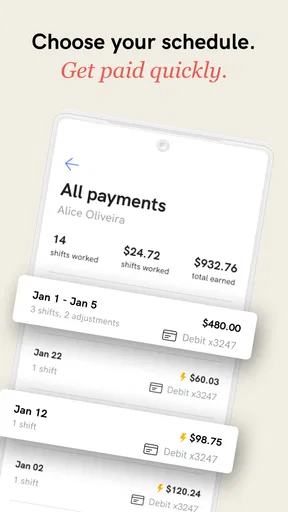
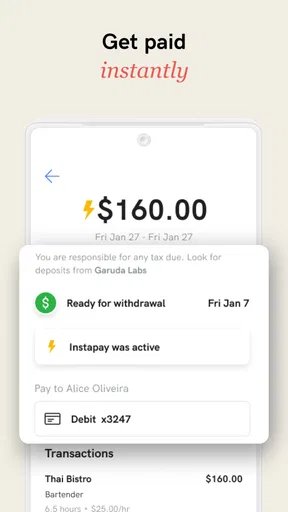
Payment details can vary depending on the shift, employer, location, and applicable local rules. The app generally displays the expected hourly rate or total earnings before you commit, helping you compare opportunities in advance. After completing a shift and meeting the required verification conditions, payment is processed through the methods supported in your region. Always review the current payment terms inside the app.
What requirements are needed to use Instawork?
Requirements differ according to your location and the type of work you want to perform. You may need to provide identity information, work authorization, contact details, employment history, and relevant certifications. Some positions can require experience, food-safety training, transportation, or specific clothing and equipment. Instawork may also perform screening or verification before allowing you to accept certain shifts.
Is Instawork safe and worth downloading?
Instawork can be useful for people who want flexible work and prefer choosing shifts instead of following a fixed schedule. The app provides job information, workplace details, and communication tools in one place, which makes the process convenient. However, shift availability is not guaranteed, earnings can vary by area, and some jobs may be physically demanding. Check reviews, requirements, cancellation policies, and privacy terms before signing up.
